

Review: A Chorus Line in Manila Reveals the Human Cost and Beauty of Show Business
A Chorus Line in Manila emerges as a moving and exhilarating portrait of the dancers and theatre artists whose discipline, sacrifice, and devotion sustain live performance from within.
LATESTTHEATER REVIEW
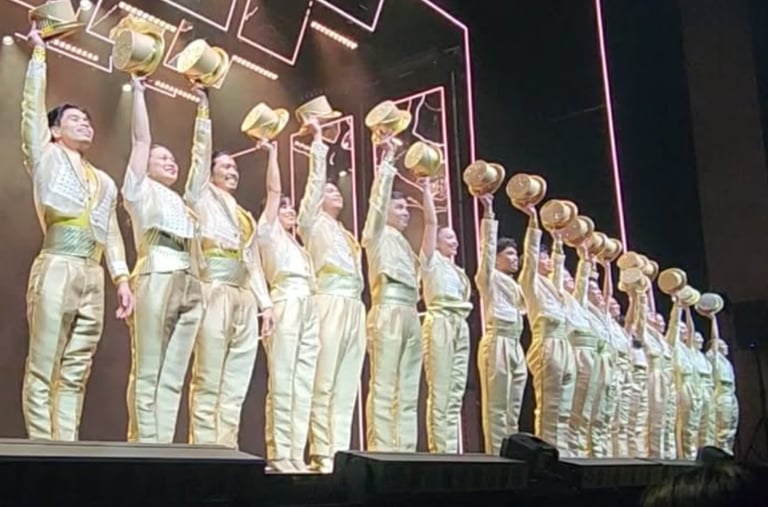
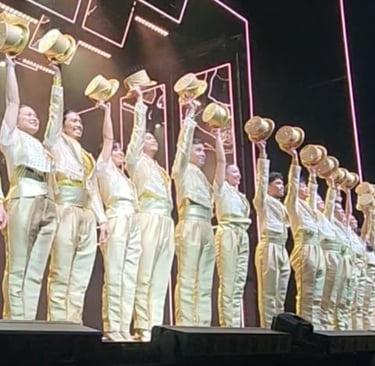
I watched A Chorus Line at Samsung Performing Arts Theater in Circuit Makati, after booking a ticket only an hour before the show. I had every intention of seeing it later in the run. That was the plan I told myself, at least. But if the past has taught me anything, it is that I am simply not built to wait calmly for a production I have wanted to see for a very long time. In the end, I knew I had to be there.
It helped that this was one of those shows that had already been living around me before I even stepped into the theatre. If you live or work in Makati, it was almost impossible to miss its diligent promotion along Ayala Avenue in the months leading up to the run. By the time I finally saw it, the show already felt present in the city, as if it had been steadily making its case for why it deserved to be seen. This Manila engagement runs for only 18 performances, from March 12 to 29, which gives the production an added sense of urgency. A show like A Chorus Line thrives on urgency anyway. It is built on the desperation, discipline, and naked hope of performers trying to secure a place in a line that could just as easily move on without them.
Conceived by Michael Bennett, with music by Marvin Hamlisch, lyrics by Edward Kleban, and a book by James Kirkwood Jr. and Nicholas Dante, A Chorus Line premiered in 1975 and remains one of musical theatre’s defining works. Theatre Group Asia has brought it to Manila under the direction and choreography of Karla Puno Garcia, whose credentials naturally invite attention. She is an Emmy Award-winning choreographer and the first Filipina and woman of color to choreograph the Tony Awards. This production also marks her Philippine directorial debut. That would already be enough to make the staging notable. What mattered to me more, once I was seated and the house lights dimmed, was whether the production would honor the integrity of the material.
I had been curious about that going in. Having been aware of the direction taken in Into the Woods, the previous Theatre Group Asia production, I wondered whether this version of A Chorus Line might be pushed toward a more localized interpretation. I will admit that I was not especially excited by that possibility. I wanted faithfulness here. I wanted the production to trust the text, the structure, the musical language, and the severe elegance of the original piece. I was relieved, and more than relieved, to find that Garcia and her team stayed faithful to the source material and did not deviate. For this particular show, that decision feels wise. A Chorus Line does not need ornamental reinvention. It needs rigor, intelligence, and performers strong enough to fill the space with their own histories.
I sat in the front row because I knew I needed to be close. I wanted to see every expression as it formed, every flicker of fear, every moment of resolve. This is a musical that asks for rawness, and I wanted to be near enough to feel it where it was happening. That choice paid off immediately. The production did not have a dull moment. For a show like this to hold, with no elaborate costumes for most of the evening, minimal set pieces, and rehearsal clothes making up the visual language for nearly the entire runtime, the audience has to be gripped by performance itself. The acting has to land. The musicality has to be exact. The audience engagement has to come from the performers’ ability to make us care about each person before that person is asked to disappear back into formation. This cast understood the assignment fully. I did not catch a single false note in spirit. They were locked in.
Conrad Ricamora was a perfect Zach. His command onstage was immediate and sustained, but what impressed me most was how he used the whole theatre to extend Zach’s authority. When Zach moved through the orchestra, the loge, the balcony, and the boxes, the production took on an uncanny realism. Whenever he was not directly in front of the dancers, I still felt his presence hovering over the room. It created the strange sensation that I was not simply watching a performance but eavesdropping on an actual audition, as though I had somehow been allowed into a space meant only for those whose careers were on the line. There was a moment when Zach stood right next to me, with the spotlight catching both of us because of my front row seat, and the intensity of what he was saying hit with unusual force. I could feel the pressure in the room. I could feel what the dancers must have been feeling under his gaze. Ricamora gave Zach control, intelligence, and a weight that made every exchange matter.
Lissa De Guzman’s Cassie was the emotional center that stayed with me long after the curtain call. Cassie’s story carries a particular kind of heartbreak. She is a dancer who reached for something bigger, only to find herself caught in the painful space between where she has been and where the industry now wants to place her. She has become too significant for the ensemble in one sense, yet the larger world has not made room for her in the way she once hoped. De Guzman portrayed that ache with tremendous depth. Watching her, I genuinely felt I was in the presence of greatness. I came into the show knowing her as Elphaba on Broadway, but that association disappeared the moment she stepped fully into Cassie. What I saw in front of me was not an accomplished performer showing range. What I saw was a character whose devotion to her art had survived disappointment and still burned fiercely.
Her dance sequence left me stunned. Some performances earn admiration. Some produce awe. Hers did both at once. It is difficult to explain in a way that does justice to the live experience, because so much of its power came from being in the room with her while it unfolded. The movement had emotional voltage. It felt personal, not decorative. And her chemistry with Conrad Ricamora was exquisite. Their scenes together had tension, history, and a mature kind of intimacy that made their dynamic feel far more layered than a simple reunion or argument. Their work together gave the show one of its richest currents.
Cassie’s storyline also sharpened one of the reasons this production arrived so powerfully for me now. Recently, remarks made by Timothée Chalamet about opera and ballet being dead art forms being kept alive left a very sour taste in my mouth. Whether he meant to dismiss them or not, the phrasing was careless, and carelessness from a highly influential actor carries weight. I do not believe artists should speak about other art forms with that kind of flattening language, especially when so much of film performance itself emerges from traditions built by theatre, dance, opera, and live performance at large. These forms are not artifacts waiting politely for relevance to be restored. They are living practices, sustained through discipline, sacrifice, and an astonishing amount of labor.
A Chorus Line makes that truth impossible to ignore. It shows the struggles and dedication of the people who keep theatre alive, and by extension, the people across the broader entertainment industry whose labor often goes unromanticized. Through Cassie especially, the show reveals how exposed an artist can become when asking for another chance. There is pride in her, and talent, and accumulated experience, and all of that still has to pass through the narrow gate of somebody else’s approval. That is a brutal thing to witness. It is also deeply familiar to anyone who respects performance as labor. This musical alone should be enough to make someone reevaluate any shallow opinion about the vitality of theatre or dance. I support this art form with all my life because it continues to hold human effort up to the light in ways few other forms can.
Among the performers who stood out most strongly to me that night, Christina Glur as Diana deserves special praise. Her performance of “What I Did for Love” was beautiful, but beauty was only one part of what made it land. There was sincerity in it, and a tenderness that reached me at exactly the point where the show’s emotional purpose becomes clearest. Listening to her, I was reminded why I wanted to see this musical in the first place. I wanted that chance to peek through the window of an artist’s heart, and Glur gave me that. Her vocal strength never came at the expense of feeling. I was so glad to have witnessed her.
Universe Ramos as Paul was the moment I found myself crying, and I was not embarrassed about it. Paul is not the loudest figure in the room. In fact, part of what makes the role so moving is that he can blend into the flow until the moment arrives when he opens himself completely. Ramos handled that turn with heartbreaking control. His monologue felt almost sacred in the way it landed. It was as though the room narrowed around him and all that remained was one person speaking from the most vulnerable part of himself. It did not feel performed at me. It felt offered, and I received it with the full force of my own emotion.
One of the beauties of this production is that each performer came across as individually capable while still contributing to the larger organism of the show. Michaela Marfori as Bebe was lovely, with a softness that drew me in and a sincerity that made her moments count. Angelo Soriano as Mike had strong star factor and the ease of someone who knows exactly how to command attention without forcing it. Ken San Jose as Mark was effective and assured. Rapah Manalo as Richie brought vitality and charm. Mikaela Regis as Sheila was the funniest presence onstage for me, and her stage presence was formidable. Jordan Andrews as Al had a voice that felt instantly gravitating. Sam Libao as Kristine was thoroughly engaging. Iya Villanueva as Maggie was endearing, funny, and very effective. Julio Laforteza as Don held his place with confidence. Brie Chappell as Val was so good that I could immediately imagine her thriving in roles like Regina George or Elle Woods. She had that combination of charisma, comic timing, and polish that reads effortlessly across the footlights. Stephen Viñas as Bobby, Jessica Carmona as Connie, Alyanna Wijangco as Judy, and Luca Olbes as Gregory all delivered with clarity and commitment. Richard Yadao as Larry was strong, while Winchester Lopez as Tom, Bomba Ding as Roy, Paulina Luzuriaga as Lois, Anna del Prado as Tricia, Jim Andrew Ferrer as Butch, Lord Kristoffer Logmao as Frank, and Rofe Villarino as Victor sustained the production’s standard with admirable precision. Franco Ramos and Anyah as cut dancers also mattered to the shape of the evening. In a show about selection and exclusion, even absence has dramatic force.
There was a scene between Cassie and Zach during their argument when the dancers kept dancing at the back, and it was one of the clearest moments of theatrical brilliance in the entire evening. Naturally, my eye went first to the emotional confrontation in front of us. For that brief stretch, they seemed to become the central couple, the apparent focal point, while the others receded. Then the insight of the staging landed. What I was seeing in that moment was a preview of what would come later. It was a glimpse of the role these dancers were ultimately auditioning for in this production within the production. The ones whose lives and histories had filled the evening would eventually be asked to support a larger image, to become part of the background architecture of performance.
That revelation reaches its full expression in “One,” which I found masterful. By then, all the characters I had rooted for, all the stories I had carefully gathered, all the specific people I had come to know, suddenly blurred into a single polished line. They became one. It was dazzling and a little devastating. Earlier in the evening, I had been invited into their individual hurts, their humor, their memories, their hopes. By the final number, they were smiling in unison, glittering under the lights, impossible to tell apart at a glance. I found that transformation beautiful. I also found it true. That is the life of show people. So much of what they give gets absorbed into the finished image, and yet the image would collapse without them.
The stage design was so well executed that it became something to admire on its own. For the most part, it remained minimal, which suited A Chorus Line perfectly, since the show is fundamentally about the cast. But when it was time to show a bit more, the production truly shined. The lights and mirrors were used with taste and precision, complementing the show without ever becoming distracting. In a musical like this, design only needs to step forward when it has something worthwhile to add, and here, it absolutely did. It enriched the production while still keeping the performers at the center.
I am giving this production a 10 out of 10. It deepened my respect for this art form, and that is not something I say casually. As someone who watches and critiques musicals, I found this an important production, and I am grateful Theatre Group Asia brought it to Manila. Audiences here deserve a closer understanding of the people who make a show complete, especially the ones we may not fully notice when everything is going right, but whose absence would be felt immediately the moment they are gone.
That is what I carried home with me after opening night. A Chorus Line reminded me that live theatre remains one of the few places where labor, aspiration, pain, skill, and beauty can stand in the same light at the same time. From the front row in Makati, I felt close enough to touch that truth. I will watch it again.
I watched A Chorus Line at Samsung Performing Arts Theater in Circuit Makati, after booking a ticket only an hour before the show. I had every intention of seeing it later in the run. That was the plan I told myself, at least. But if the past has taught me anything, it is that I am simply not built to wait calmly for a production I have wanted to see for a very long time. In the end, I knew I had to be there.
It helped that this was one of those shows that had already been living around me before I even stepped into the theatre. If you live or work in Makati, it was almost impossible to miss its diligent promotion along Ayala Avenue in the months leading up to the run. By the time I finally saw it, the show already felt present in the city, as if it had been steadily making its case for why it deserved to be seen. This Manila engagement runs for only 18 performances, from March 12 to 29, which gives the production an added sense of urgency. A show like A Chorus Line thrives on urgency anyway. It is built on the desperation, discipline, and naked hope of performers trying to secure a place in a line that could just as easily move on without them.
Conceived by Michael Bennett, with music by Marvin Hamlisch, lyrics by Edward Kleban, and a book by James Kirkwood Jr. and Nicholas Dante, A Chorus Line premiered in 1975 and remains one of musical theatre’s defining works. Theatre Group Asia has brought it to Manila under the direction and choreography of Karla Puno Garcia, whose credentials naturally invite attention. She is an Emmy Award-winning choreographer and the first Filipina and woman of color to choreograph the Tony Awards. This production also marks her Philippine directorial debut. That would already be enough to make the staging notable. What mattered to me more, once I was seated and the house lights dimmed, was whether the production would honor the integrity of the material.
I had been curious about that going in. Having been aware of the direction taken in Into the Woods, the previous Theatre Group Asia production, I wondered whether this version of A Chorus Line might be pushed toward a more localized interpretation. I will admit that I was not especially excited by that possibility. I wanted faithfulness here. I wanted the production to trust the text, the structure, the musical language, and the severe elegance of the original piece. I was relieved, and more than relieved, to find that Garcia and her team stayed faithful to the source material and did not deviate. For this particular show, that decision feels wise. A Chorus Line does not need ornamental reinvention. It needs rigor, intelligence, and performers strong enough to fill the space with their own histories.
I sat in the front row because I knew I needed to be close. I wanted to see every expression as it formed, every flicker of fear, every moment of resolve. This is a musical that asks for rawness, and I wanted to be near enough to feel it where it was happening. That choice paid off immediately. The production did not have a dull moment. For a show like this to hold, with no elaborate costumes for most of the evening, minimal set pieces, and rehearsal clothes making up the visual language for nearly the entire runtime, the audience has to be gripped by performance itself. The acting has to land. The musicality has to be exact. The audience engagement has to come from the performers’ ability to make us care about each person before that person is asked to disappear back into formation. This cast understood the assignment fully. I did not catch a single false note in spirit. They were locked in.
Conrad Ricamora was a perfect Zach. His command onstage was immediate and sustained, but what impressed me most was how he used the whole theatre to extend Zach’s authority. When Zach moved through the orchestra, the loge, the balcony, and the boxes, the production took on an uncanny realism. Whenever he was not directly in front of the dancers, I still felt his presence hovering over the room. It created the strange sensation that I was not simply watching a performance but eavesdropping on an actual audition, as though I had somehow been allowed into a space meant only for those whose careers were on the line. There was a moment when Zach stood right next to me, with the spotlight catching both of us because of my front row seat, and the intensity of what he was saying hit with unusual force. I could feel the pressure in the room. I could feel what the dancers must have been feeling under his gaze. Ricamora gave Zach control, intelligence, and a weight that made every exchange matter.
Lissa De Guzman’s Cassie was the emotional center that stayed with me long after the curtain call. Cassie’s story carries a particular kind of heartbreak. She is a dancer who reached for something bigger, only to find herself caught in the painful space between where she has been and where the industry now wants to place her. She has become too significant for the ensemble in one sense, yet the larger world has not made room for her in the way she once hoped. De Guzman portrayed that ache with tremendous depth. Watching her, I genuinely felt I was in the presence of greatness. I came into the show knowing her as Elphaba on Broadway, but that association disappeared the moment she stepped fully into Cassie. What I saw in front of me was not an accomplished performer showing range. What I saw was a character whose devotion to her art had survived disappointment and still burned fiercely.
Her dance sequence left me stunned. Some performances earn admiration. Some produce awe. Hers did both at once. It is difficult to explain in a way that does justice to the live experience, because so much of its power came from being in the room with her while it unfolded. The movement had emotional voltage. It felt personal, not decorative. And her chemistry with Conrad Ricamora was exquisite. Their scenes together had tension, history, and a mature kind of intimacy that made their dynamic feel far more layered than a simple reunion or argument. Their work together gave the show one of its richest currents.
Cassie’s storyline also sharpened one of the reasons this production arrived so powerfully for me now. Recently, remarks made by Timothée Chalamet about opera and ballet being dead art forms being kept alive left a very sour taste in my mouth. Whether he meant to dismiss them or not, the phrasing was careless, and carelessness from a highly influential actor carries weight. I do not believe artists should speak about other art forms with that kind of flattening language, especially when so much of film performance itself emerges from traditions built by theatre, dance, opera, and live performance at large. These forms are not artifacts waiting politely for relevance to be restored. They are living practices, sustained through discipline, sacrifice, and an astonishing amount of labor.
A Chorus Line makes that truth impossible to ignore. It shows the struggles and dedication of the people who keep theatre alive, and by extension, the people across the broader entertainment industry whose labor often goes unromanticized. Through Cassie especially, the show reveals how exposed an artist can become when asking for another chance. There is pride in her, and talent, and accumulated experience, and all of that still has to pass through the narrow gate of somebody else’s approval. That is a brutal thing to witness. It is also deeply familiar to anyone who respects performance as labor. This musical alone should be enough to make someone reevaluate any shallow opinion about the vitality of theatre or dance. I support this art form with all my life because it continues to hold human effort up to the light in ways few other forms can.
Among the performers who stood out most strongly to me that night, Christina Glur as Diana deserves special praise. Her performance of “What I Did for Love” was beautiful, but beauty was only one part of what made it land. There was sincerity in it, and a tenderness that reached me at exactly the point where the show’s emotional purpose becomes clearest. Listening to her, I was reminded why I wanted to see this musical in the first place. I wanted that chance to peek through the window of an artist’s heart, and Glur gave me that. Her vocal strength never came at the expense of feeling. I was so glad to have witnessed her.
Universe Ramos as Paul was the moment I found myself crying, and I was not embarrassed about it. Paul is not the loudest figure in the room. In fact, part of what makes the role so moving is that he can blend into the flow until the moment arrives when he opens himself completely. Ramos handled that turn with heartbreaking control. His monologue felt almost sacred in the way it landed. It was as though the room narrowed around him and all that remained was one person speaking from the most vulnerable part of himself. It did not feel performed at me. It felt offered, and I received it with the full force of my own emotion.
One of the beauties of this production is that each performer came across as individually capable while still contributing to the larger organism of the show. Michaela Marfori as Bebe was lovely, with a softness that drew me in and a sincerity that made her moments count. Angelo Soriano as Mike had strong star factor and the ease of someone who knows exactly how to command attention without forcing it. Ken San Jose as Mark was effective and assured. Rapah Manalo as Richie brought vitality and charm. Mikaela Regis as Sheila was the funniest presence onstage for me, and her stage presence was formidable. Jordan Andrews as Al had a voice that felt instantly gravitating. Sam Libao as Kristine was thoroughly engaging. Iya Villanueva as Maggie was endearing, funny, and very effective. Julio Laforteza as Don held his place with confidence. Brie Chappell as Val was so good that I could immediately imagine her thriving in roles like Regina George or Elle Woods. She had that combination of charisma, comic timing, and polish that reads effortlessly across the footlights. Stephen Viñas as Bobby, Jessica Carmona as Connie, Alyanna Wijangco as Judy, and Luca Olbes as Gregory all delivered with clarity and commitment. Richard Yadao as Larry was strong, while Winchester Lopez as Tom, Bomba Ding as Roy, Paulina Luzuriaga as Lois, Anna del Prado as Tricia, Jim Andrew Ferrer as Butch, Lord Kristoffer Logmao as Frank, and Rofe Villarino as Victor sustained the production’s standard with admirable precision. Franco Ramos and Anyah as cut dancers also mattered to the shape of the evening. In a show about selection and exclusion, even absence has dramatic force.
There was a scene between Cassie and Zach during their argument when the dancers kept dancing at the back, and it was one of the clearest moments of theatrical brilliance in the entire evening. Naturally, my eye went first to the emotional confrontation in front of us. For that brief stretch, they seemed to become the central couple, the apparent focal point, while the others receded. Then the insight of the staging landed. What I was seeing in that moment was a preview of what would come later. It was a glimpse of the role these dancers were ultimately auditioning for in this production within the production. The ones whose lives and histories had filled the evening would eventually be asked to support a larger image, to become part of the background architecture of performance.
That revelation reaches its full expression in “One,” which I found masterful. By then, all the characters I had rooted for, all the stories I had carefully gathered, all the specific people I had come to know, suddenly blurred into a single polished line. They became one. It was dazzling and a little devastating. Earlier in the evening, I had been invited into their individual hurts, their humor, their memories, their hopes. By the final number, they were smiling in unison, glittering under the lights, impossible to tell apart at a glance. I found that transformation beautiful. I also found it true. That is the life of show people. So much of what they give gets absorbed into the finished image, and yet the image would collapse without them.
The stage design was so well executed that it became something to admire on its own. For the most part, it remained minimal, which suited A Chorus Line perfectly, since the show is fundamentally about the cast. But when it was time to show a bit more, the production truly shined. The lights and mirrors were used with taste and precision, complementing the show without ever becoming distracting. In a musical like this, design only needs to step forward when it has something worthwhile to add, and here, it absolutely did. It enriched the production while still keeping the performers at the center.
I am giving this production a 10 out of 10. It deepened my respect for this art form, and that is not something I say casually. As someone who watches and critiques musicals, I found this an important production, and I am grateful Theatre Group Asia brought it to Manila. Audiences here deserve a closer understanding of the people who make a show complete, especially the ones we may not fully notice when everything is going right, but whose absence would be felt immediately the moment they are gone.
That is what I carried home with me after opening night. A Chorus Line reminded me that live theatre remains one of the few places where labor, aspiration, pain, skill, and beauty can stand in the same light at the same time. From the front row in Makati, I felt close enough to touch that truth. I will watch it again.
Related Articles
Related Articles

Stay in the Loop
Get fresh reviews and theatre news straight from your inbox.
Editorial & Press Inquiries
Looking to feature your production or extend a press invitation? I’d love to hear from you.
whilitshow@gmail.com
Editorial & Press Inquiries
Looking to feature your production or extend a press invitation? I’d love to hear from you.
whilitshow@gmail.com
Contact
Follow me on social media
whilitshow@gmail.com
© 2026. All rights reserved.