

Review: Dear Evan Hansen in Manila – A Fresh Staging of a Contemporary Favourite
Dear Evan Hansen in Manila features Ellis Kirk in a standout performance on the stage of The Theatre at Solaire, bringing the story’s emotions vividly to life.
THEATER REVIEWLATEST


I walked into Dear Evan Hansen at The Theatre at Solaire with a mixture of anticipation and a quiet worry that the emotional force I’d heard so much about might somehow elude me that night. Presented in Manila by GMG Productions, the production marked the musical’s Asian premiere, arriving as a non-replica staging shaped by Adam Penford’s direction and developed from its UK tour origins. While the core of Steven Levenson’s book and the score by Benj Pasek and Justin Paul remain intact, this version reflects a new creative team and the logistical realities of touring.
What immediately stood out was how restrained the production felt. Dear Evan Hansen did not present itself as a show aiming for grand gestures or theatrical scale. Instead, it unfolded quietly, often feeling closer to a conversation than a declaration. The musical demands attentiveness rather than spectacle, and on this night, its emotional impact fluctuated deliberately, sometimes landing with force, sometimes arriving more subtly. That unevenness felt appropriate to a story so deeply invested in uncertainty and emotional vulnerability.
At the center of the performance was Ellis Kirk as Evan Hansen, whose portrayal anchored the evening. Any initial hesitation I felt about inevitable comparisons to earlier interpretations quickly dissolved. Kirk’s Evan was specific and convincing, defined by nervous physicality and a carefully calibrated sense of unease. His performance captured Evan’s anxiety without exaggeration, allowing moments of stillness and hesitation to speak as clearly as the songs themselves. Vocally, his tone bore a resemblance to Ben Platt’s, which will likely appeal to fans of the original, but Kirk avoided imitation. His delivery felt grounded and personal, serving the material rather than competing with its legacy.
That distinction matters because Dear Evan Hansen depends less on theatrical flair and more on credibility. The show functions as an examination of interior experience, and its emotional weight rests on whether the audience believes what is happening inside its central character. Kirk sustained that belief throughout the performance, giving the story a stable emotional center.
The supporting cast contributed significantly to that sense of credibility. Rebecca McKinnis as Heidi Hansen brought a restrained warmth to Evan’s mother, avoiding sentimentality while conveying genuine care and exhaustion. The Murphys—Zoe Athena as Zoe, Helen Anker and Hal Fowler as Cynthia and Larry, and Rhys Hopkins as Connor—felt convincingly connected. Their scenes together carried a lived-in quality that suggested shared history rather than staged interaction. In quieter moments, particularly those set around the family table, the performances felt grounded and emotionally precise.
Moments of humor were handled thoughtfully as well. Tom Dickerson’s Jared Kleinman emerged as an unexpected highlight. His timing was sharp, and his delivery consistently landed with the audience. The humor never felt forced or disruptive; instead, it provided necessary contrast, allowing the heavier emotional material elsewhere in the show to resonate more clearly.
That said, the production was not without complications. Certain staging elements associated with the tour were absent during the Manila run. Some set pieces, reportedly including mobile window panels and digital projection elements, never arrived. The creative team adapted effectively, and these omissions were unlikely to be noticeable to audience members unfamiliar with the original design. Still, their absence occasionally resulted in staging that felt pared back to the point of incompletion. At times, this simplicity sharpened the emotional focus. At others, it limited the visual dynamism the production seemed designed to support. The cast and crew handled these adjustments professionally, and the show never felt compromised in intent, even when the visuals suggested constraint.
Technical issues were more apparent, particularly in sound and lighting. There were moments when lyrics were difficult to discern due to inconsistent sound mixing, and a few spotlight cues arrived slightly late, drawing brief attention away from the performers. These issues did not overwhelm the experience, but they were noticeable, especially during key musical moments. Given that this was opening weekend, I am inclined to view these as early-run adjustments rather than systemic problems.
The scale of the staging in relation to The Theatre at Solaire also stood out. From my seat in the balcony right, the performance area felt smaller than the venue itself, with large portions of the stage left unused. This created a sense of distance that occasionally worked against the show’s intimacy. While this is as much a matter of venue compatibility as staging choice, the contrast between the size of the space and the contained nature of the production was difficult to ignore.
Despite these limitations, the emotional impact of the performance remained intact. I left the theatre feeling both weighed down and quietly uplifted, a response that felt consistent with the show’s intentions. Dear Evan Hansen does not aim to resolve discomfort so much as to sit with it, and this production respected that approach.
With this in mind, I’m giving Dear Evan Hansen a 7 out of 10. The performances were rich and moving enough to eclipse the technical limitations, and the emotional core of the show resonated with me throughout the evening. Whatever its imperfections, the production succeeded in delivering moments that felt sincere and unguarded.
Ultimately, Dear Evan Hansen in Manila honored the vulnerability at the heart of the material. I was not untouched by it. The show invited openness rather than spectacle, and that invitation carried weight. Live theatre often succeeds not by perfection but by presence, and on this night, this production created space for connection. I left the theatre aware that the experience would linger, its music and its questions continuing to echo well beyond the final note.
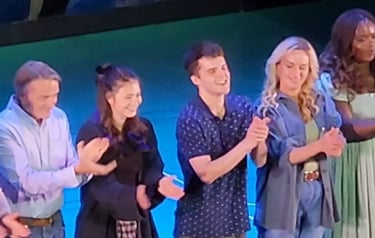
I walked into Dear Evan Hansen at The Theatre at Solaire with a mixture of anticipation and a quiet worry that the emotional force I’d heard so much about might somehow elude me that night. Presented in Manila by GMG Productions, the production marked the musical’s Asian premiere, arriving as a non-replica staging shaped by Adam Penford’s direction and developed from its UK tour origins. While the core of Steven Levenson’s book and the score by Benj Pasek and Justin Paul remain intact, this version reflects a new creative team and the logistical realities of touring.
What immediately stood out was how restrained the production felt. Dear Evan Hansen did not present itself as a show aiming for grand gestures or theatrical scale. Instead, it unfolded quietly, often feeling closer to a conversation than a declaration. The musical demands attentiveness rather than spectacle, and on this night, its emotional impact fluctuated deliberately, sometimes landing with force, sometimes arriving more subtly. That unevenness felt appropriate to a story so deeply invested in uncertainty and emotional vulnerability.
At the center of the performance was Ellis Kirk as Evan Hansen, whose portrayal anchored the evening. Any initial hesitation I felt about inevitable comparisons to earlier interpretations quickly dissolved. Kirk’s Evan was specific and convincing, defined by nervous physicality and a carefully calibrated sense of unease. His performance captured Evan’s anxiety without exaggeration, allowing moments of stillness and hesitation to speak as clearly as the songs themselves. Vocally, his tone bore a resemblance to Ben Platt’s, which will likely appeal to fans of the original, but Kirk avoided imitation. His delivery felt grounded and personal, serving the material rather than competing with its legacy.
That distinction matters because Dear Evan Hansen depends less on theatrical flair and more on credibility. The show functions as an examination of interior experience, and its emotional weight rests on whether the audience believes what is happening inside its central character. Kirk sustained that belief throughout the performance, giving the story a stable emotional center.
The supporting cast contributed significantly to that sense of credibility. Rebecca McKinnis as Heidi Hansen brought a restrained warmth to Evan’s mother, avoiding sentimentality while conveying genuine care and exhaustion. The Murphys—Zoe Athena as Zoe, Helen Anker and Hal Fowler as Cynthia and Larry, and Rhys Hopkins as Connor—felt convincingly connected. Their scenes together carried a lived-in quality that suggested shared history rather than staged interaction. In quieter moments, particularly those set around the family table, the performances felt grounded and emotionally precise.
Moments of humor were handled thoughtfully as well. Tom Dickerson’s Jared Kleinman emerged as an unexpected highlight. His timing was sharp, and his delivery consistently landed with the audience. The humor never felt forced or disruptive; instead, it provided necessary contrast, allowing the heavier emotional material elsewhere in the show to resonate more clearly.
That said, the production was not without complications. Certain staging elements associated with the tour were absent during the Manila run. Some set pieces, reportedly including mobile window panels and digital projection elements, never arrived. The creative team adapted effectively, and these omissions were unlikely to be noticeable to audience members unfamiliar with the original design. Still, their absence occasionally resulted in staging that felt pared back to the point of incompletion. At times, this simplicity sharpened the emotional focus. At others, it limited the visual dynamism the production seemed designed to support. The cast and crew handled these adjustments professionally, and the show never felt compromised in intent, even when the visuals suggested constraint.
Technical issues were more apparent, particularly in sound and lighting. There were moments when lyrics were difficult to discern due to inconsistent sound mixing, and a few spotlight cues arrived slightly late, drawing brief attention away from the performers. These issues did not overwhelm the experience, but they were noticeable, especially during key musical moments. Given that this was opening weekend, I am inclined to view these as early-run adjustments rather than systemic problems.
The scale of the staging in relation to The Theatre at Solaire also stood out. From my seat in the balcony right, the performance area felt smaller than the venue itself, with large portions of the stage left unused. This created a sense of distance that occasionally worked against the show’s intimacy. While this is as much a matter of venue compatibility as staging choice, the contrast between the size of the space and the contained nature of the production was difficult to ignore.
Despite these limitations, the emotional impact of the performance remained intact. I left the theatre feeling both weighed down and quietly uplifted, a response that felt consistent with the show’s intentions. Dear Evan Hansen does not aim to resolve discomfort so much as to sit with it, and this production respected that approach.
With this in mind, I’m giving Dear Evan Hansen a 7 out of 10. The performances were rich and moving enough to eclipse the technical limitations, and the emotional core of the show resonated with me throughout the evening. Whatever its imperfections, the production succeeded in delivering moments that felt sincere and unguarded.
Ultimately, Dear Evan Hansen in Manila honored the vulnerability at the heart of the material. I was not untouched by it. The show invited openness rather than spectacle, and that invitation carried weight. Live theatre often succeeds not by perfection but by presence, and on this night, this production created space for connection. I left the theatre aware that the experience would linger, its music and its questions continuing to echo well beyond the final note.
Related Articles
Related Articles

Stay in the Loop
Get fresh reviews and theatre news straight from your inbox.
Editorial & Press Inquiries
Looking to feature your production or extend a press invitation? I’d love to hear from you.
whilitshow@gmail.com
Editorial & Press Inquiries
Looking to feature your production or extend a press invitation? I’d love to hear from you.
whilitshow@gmail.com
Contact
Follow me on social media
whilitshow@gmail.com
© 2026. All rights reserved.