

Jesus Christ Superstar Brings Its Full Rock-Opera Force to Manila in 2026
Experience Jesus Christ Superstar live in Manila this May 2026 as the international tour brings its acclaimed staging to The Theatre at Solaire with full musical and physical intensity.
LATESTFEATURE
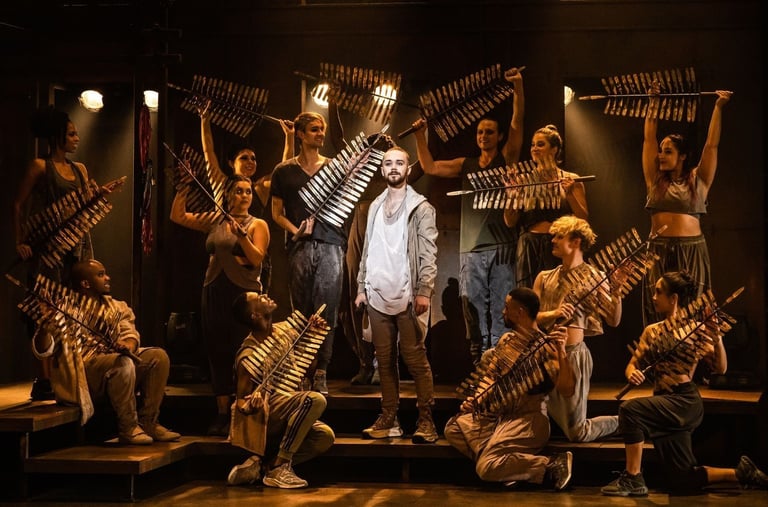
I have learned not to underestimate the charge that Jesus Christ Superstar carries when it is performed live. Recordings can give you the pulse of its score, and filmed versions can hint at its scale, but neither captures the sensation of sharing the same space as its musicians and performers. When the international tour arrives at The Theatre at Solaire from May 2 to 24, 2026, that immediacy is exactly what will be on offer. Produced by GMG Productions in collaboration with David Ian for Crossroads Live and Work Light Productions, this staging brings the acclaimed Regent’s Park Open Air Theatre reimagining to Manila, positioning it as one of the more consequential musical events of the year.
This production matters because Jesus Christ Superstar is not only something to hear. It is something to absorb. Its sound, movement, and imagery gain force in a shared environment where the audience’s own breath becomes part of the rhythm. That is where its real impact lives.
When Tim Rice and Andrew Lloyd Webber created Jesus Christ Superstar, they wrote a score that defied musical theatre expectations. It is built on electric guitars, driving percussion, and vocal lines that stretch performers to their limits. Numbers like “Heaven on Their Minds,” “I Don’t Know How to Love Him,” “Everything’s Alright,” and “Superstar” operate as driving forces within the show. Their impact lands in the body, not just the ear.
The Regent’s Park production, which went on to win the Olivier Award, leans into this physicality. Under director Timothy Sheader and choreographer Drew McOnie, bodies function as instruments. Movement responds directly to the rhythms of the band. The production makes no attempt to dilute the show’s rock opera roots. Instead, it pushes them forward. And in live performance, that creates a kind of current that recordings cannot replicate.
For Manila audiences who may know the music from cast albums or school productions, this touring version offers a chance to encounter the material with a clarity and intensity usually reserved for major international venues. The design work by Tom Scutt, lighting by Lee Curran, sound by Nick Lidster, and music supervision by Tom Deering all contribute to a production that treats space as a resonating chamber. Every choice privileges presence.
The score’s force is only one reason this staging is significant here. The Philippines is a country where religion is woven deeply into public and private life. That raises an understandable question whenever Jesus Christ Superstar is announced: Will it be controversial?
The simple answer is no, and the reason has everything to do with how the musical functions.
It does not parody belief, nor does it aim to provoke for the sake of shock. Instead, it explores human experience through a framework that audiences already recognize. The material approaches its characters with seriousness and curiosity. It treats emotion, doubt, devotion, and pressure as universal forces rather than theological arguments. That is why the work has thrived in corners of the world with strong religious traditions. It finds its resonance not by challenging faith, but by acknowledging the complexity of living inside it.
In Manila, this context offers something unique. Because the story is familiar, audiences arrive with built-in knowledge. That leaves room for the production to focus on interpretation, musical storytelling, and physical expression. It invites viewers to experience the narrative through sound, movement, and atmosphere instead of exposition. It asks them to listen in new ways to something they thought they already knew.
Why You Need to Experience It in the Theater
Musicals often translate well to recordings, but some were built for the sensory density of live performance. Jesus Christ Superstar belongs firmly in that category. Here’s why:
The score intensifies in person
The rock orchestration gains size and urgency when the band is present. The tension in the guitar riffs, the immediacy of the percussion, and the vocal demands on the performers all sharpen when they are happening ten meters away rather than through speakers.
Movement carries emotional weight
McOnie’s choreography is athletic and expressive. The physical vocabulary becomes part of the storytelling. Watching bodies respond to the music in real time creates a level of emotional access that no recording can simulate.
The collective atmosphere matters
The show’s momentum builds through shared energy. When the room leans in, the performers feel it, and the piece expands. That feedback loop is part of the musical’s design.
The spiritual dimension becomes experiential, not ideological
The production does not ask the audience to resolve theological questions. It asks them to sit inside the emotional stakes. In a live setting, this becomes less about interpreting the story and more about registering the intensity of its sound and movement.
Taken together, these elements reveal a musical that gathers its full force only when it is allowed to unfold in the immediacy of live performance.
This is not just another stop on an international tour. It is an opportunity for Manila to engage with a version of Jesus Christ Superstar that has already reshaped how the musical is viewed elsewhere. The Regent’s Park production revived interest in the piece by foregrounding its urgency. It made the score feel raw again. It restored the sense that the work is not a museum piece from the 1970s, but a living, breathing rock opera with something to say about human pressure and collective experience.
The absence of official casting at this moment only adds to the anticipation. The roles in this musical require stamina, vocal range, and physical commitment. Whoever takes the stage will be stepping into a lineage of performers known for intensity rather than polish.
When Jesus Christ Superstar begins its run at The Theatre at Solaire on May 2, those in the room will experience a work built on presence as much as story. The exchange of sound and motion creates a current that gathers performers, musicians, and audience into one shared flow. It is in that moment of convergence that the piece becomes most itself, moving through the space and into the people who have come to witness it.
I have learned not to underestimate the charge that Jesus Christ Superstar carries when it is performed live. Recordings can give you the pulse of its score, and filmed versions can hint at its scale, but neither captures the sensation of sharing the same space as its musicians and performers. When the international tour arrives at The Theatre at Solaire from May 2 to 24, 2026, that immediacy is exactly what will be on offer. Produced by GMG Productions in collaboration with David Ian for Crossroads Live and Work Light Productions, this staging brings the acclaimed Regent’s Park Open Air Theatre reimagining to Manila, positioning it as one of the more consequential musical events of the year.
This production matters because Jesus Christ Superstar is not only something to hear. It is something to absorb. Its sound, movement, and imagery gain force in a shared environment where the audience’s own breath becomes part of the rhythm. That is where its real impact lives.
When Tim Rice and Andrew Lloyd Webber created Jesus Christ Superstar, they wrote a score that defied musical theatre expectations. It is built on electric guitars, driving percussion, and vocal lines that stretch performers to their limits. Numbers like “Heaven on Their Minds,” “I Don’t Know How to Love Him,” “Everything’s Alright,” and “Superstar” operate as driving forces within the show. Their impact lands in the body, not just the ear.
The Regent’s Park production, which went on to win the Olivier Award, leans into this physicality. Under director Timothy Sheader and choreographer Drew McOnie, bodies function as instruments. Movement responds directly to the rhythms of the band. The production makes no attempt to dilute the show’s rock opera roots. Instead, it pushes them forward. And in live performance, that creates a kind of current that recordings cannot replicate.
For Manila audiences who may know the music from cast albums or school productions, this touring version offers a chance to encounter the material with a clarity and intensity usually reserved for major international venues. The design work by Tom Scutt, lighting by Lee Curran, sound by Nick Lidster, and music supervision by Tom Deering all contribute to a production that treats space as a resonating chamber. Every choice privileges presence.
The score’s force is only one reason this staging is significant here. The Philippines is a country where religion is woven deeply into public and private life. That raises an understandable question whenever Jesus Christ Superstar is announced: Will it be controversial?
The simple answer is no, and the reason has everything to do with how the musical functions.
It does not parody belief, nor does it aim to provoke for the sake of shock. Instead, it explores human experience through a framework that audiences already recognize. The material approaches its characters with seriousness and curiosity. It treats emotion, doubt, devotion, and pressure as universal forces rather than theological arguments. That is why the work has thrived in corners of the world with strong religious traditions. It finds its resonance not by challenging faith, but by acknowledging the complexity of living inside it.
In Manila, this context offers something unique. Because the story is familiar, audiences arrive with built-in knowledge. That leaves room for the production to focus on interpretation, musical storytelling, and physical expression. It invites viewers to experience the narrative through sound, movement, and atmosphere instead of exposition. It asks them to listen in new ways to something they thought they already knew.
Why You Need to Experience It in the Theater
Musicals often translate well to recordings, but some were built for the sensory density of live performance. Jesus Christ Superstar belongs firmly in that category. Here’s why:
The score intensifies in person
The rock orchestration gains size and urgency when the band is present. The tension in the guitar riffs, the immediacy of the percussion, and the vocal demands on the performers all sharpen when they are happening ten meters away rather than through speakers.
Movement carries emotional weight
McOnie’s choreography is athletic and expressive. The physical vocabulary becomes part of the storytelling. Watching bodies respond to the music in real time creates a level of emotional access that no recording can simulate.
The collective atmosphere matters
The show’s momentum builds through shared energy. When the room leans in, the performers feel it, and the piece expands. That feedback loop is part of the musical’s design.
The spiritual dimension becomes experiential, not ideological
The production does not ask the audience to resolve theological questions. It asks them to sit inside the emotional stakes. In a live setting, this becomes less about interpreting the story and more about registering the intensity of its sound and movement.
Taken together, these elements reveal a musical that gathers its full force only when it is allowed to unfold in the immediacy of live performance.
This is not just another stop on an international tour. It is an opportunity for Manila to engage with a version of Jesus Christ Superstar that has already reshaped how the musical is viewed elsewhere. The Regent’s Park production revived interest in the piece by foregrounding its urgency. It made the score feel raw again. It restored the sense that the work is not a museum piece from the 1970s, but a living, breathing rock opera with something to say about human pressure and collective experience.
The absence of official casting at this moment only adds to the anticipation. The roles in this musical require stamina, vocal range, and physical commitment. Whoever takes the stage will be stepping into a lineage of performers known for intensity rather than polish.
When Jesus Christ Superstar begins its run at The Theatre at Solaire on May 2, those in the room will experience a work built on presence as much as story. The exchange of sound and motion creates a current that gathers performers, musicians, and audience into one shared flow. It is in that moment of convergence that the piece becomes most itself, moving through the space and into the people who have come to witness it.
Related Articles
Related Articles

Stay in the Loop
Get fresh reviews and theatre news straight from your inbox.
Editorial & Press Inquiries
Looking to feature your production or extend a press invitation? I’d love to hear from you.
whilitshow@gmail.com
Editorial & Press Inquiries
Looking to feature your production or extend a press invitation? I’d love to hear from you.
whilitshow@gmail.com
Contact
Follow me on social media
whilitshow@gmail.com
© 2026. All rights reserved.