

Review: Les Misérables World Tour Spectacular in Manila – A Flame That Endures
Les Misérables: World Tour Spectacular arrives in Manila with commanding performances and world-class scale, reaffirming the musical’s enduring power and emotional impact.
LATESTTHEATER REVIEW
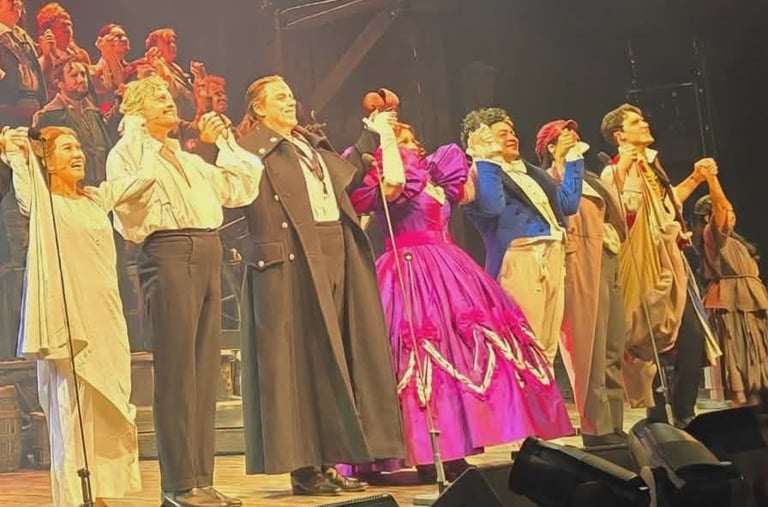
When I saw Les Misérables: World Tour Spectacular at The Theatre at Solaire on January 25, 2026, I already knew how the night would end emotionally. This is a show that has always found its way to me, no matter the production, the cast, or the passage of time. Ten years had passed since I last saw Les Misérables live in Manila, but there was no sense of testing whether it would still work. I came in fully expecting to be moved, aware that this musical has a way of asserting its power every time it is given the space to do so.
Presented by GMG Productions in partnership with UnionBank, the Manila run has been sold out, and it isn’t hard to see why. Expanded from Les Misérables: The Staged Concert, this production brings the concert format to a scale rarely seen locally, with a full orchestra onstage, projections, and a large international cast supported by Filipino performers. It is designed to overwhelm, and for the most part, it succeeds.
I attended a performance led by Owain Williams, understudy to Geronimo Rauch, as Jean Valjean. From the outset, Williams approached the role with clarity and control. His Valjean was not overstated, nor did it rely on vocal excess to establish authority. Instead, he played the character as a man shaped by discipline and moral resolve, which suited the concert format well. His performance felt secure, focused, and emotionally consistent throughout the night.
That steadiness paid off most in his scenes opposite Jeremy Secomb’s Javert. The dynamic between them was strong, built on contrast rather than volume. Secomb played Javert with conviction and precision, never tipping into caricature. Their confrontations carried real tension, and although the narrative clearly positions Valjean as the moral center, Secomb’s portrayal was strong enough to make Javert’s rigidity feel internally coherent rather than merely antagonistic. It is that friction, between mercy and absolutism, that gives Les Misérables its staying power, and both actors understood that.
One of the most commanding performances of the evening came from Lea Salonga as Madame Thénardier, marking her third distinct role in Les Misérables. Her authority over the character and the room was immediate. She leaned fully into the comedy with sharp timing and a believable accent, understanding exactly how much space the role demands. During “Master of the House,” the audience initially responded with polite applause rather than full enthusiasm, a hesitation that seemed rooted more in uncertainty than disengagement. Salonga addressed it directly, still in character, urging the crowd to respond more freely. The shift was instant. It was a reminder that the Thénardiers are meant to be enjoyed, and that even in a show as emotionally heavy as Les Misérables, laughter and audibility are part of the contract.
Red Concepcion’s Thénardier matched Salonga’s energy well. His performance was confident, well-calibrated, and consistently funny without losing the character’s underlying cruelty. The chemistry between the two was clear, and together they made their scenes some of the most entertaining of the night.
For me, the most emotionally charged return was Rachelle Ann Go as Fantine. She was the Fantine I saw ten years ago in Manila, and seeing her reprise the role in the same venue carried personal weight. I had bought my ticket early, close to the stage, hoping she might be part of the cast even before announcements were made. Watching her again confirmed why that hope mattered. Her Fantine was restrained, vocally assured, and devastating in its simplicity. Though Fantine exits early, Go’s performance left one of the strongest impressions of the night.
Emily Bautista as Éponine was a revelation. There was something youthful and open in her portrayal, a light that made Éponine’s longing feel especially immediate. I felt lucky to be catching her now, at this moment, in this role.
Seeing Fantine, Éponine, and the Thénardiers portrayed by Filipino actors felt significant, and not in a symbolic way. The performances justified the casting completely. This production made a strong case that Filipino performers belong in these roles not as exceptions, but as part of the global standard.
Will Callan as Marius and Lulu-Mae Pears as Cosette were tender and sincere, and they looked lovely together. Still, I found myself reflecting on how the concert format affects Cosette more than most characters. Without the connective tissue of full staging and narrative detail, her emotional stakes can feel lighter in comparison. It is not a flaw in Pears’ performance, but rather a limitation of the format. Cosette’s complexity often reveals itself more clearly in fully staged productions, where her inner life has room to expand.
Earl Carpenter’s Bishop prompted a different kind of reaction. Having grown up watching the 25th Anniversary Concert, where Carpenter played the same role, seeing him live felt surreal. It was one of those moments where the boundary between recorded memory and present experience briefly disappeared.
The performance that ultimately surprised me most was Harry Chandler as Enjolras. His presence was commanding from the moment he stepped forward. He sang with conviction and physical grounding, and his interpretation gave Enjolras the authority the role requires. As someone deeply familiar with the show, I found myself anticipating his scenes more than expected. Chandler brought urgency without excess, and his performance suggested an actor capable of carrying even larger roles in the future.
In terms of scale, the production is undeniably world-class. The orchestra, projections, and sheer vocal force fill the space effectively. I cried multiple times throughout the show, not out of sentimentality, but because Les Misérables still understands how to place emotional pressure exactly where it belongs.
More than anything, I felt grateful. Grateful that this production came to Manila. Grateful that local audiences were given access to a version of Les Misérables that does not feel diluted or compromised. I had long assumed I would need to travel to see the show again. That it arrived here instead felt unexpected and deeply welcome.
With that in mind, I am giving Les Misérables: World Tour Spectacular a 10 out of 10. Not because it reinvents the musical, but because it confirms why it endures. The flame is still there, sustained by performances that respect the material and an audience willing to meet it with the seriousness it deserves. Ten years was a long wait, but it proved to be worth it. And I already know I’ll be back before the run ends.

When I saw Les Misérables: World Tour Spectacular at The Theatre at Solaire on January 25, 2026, I already knew how the night would end emotionally. This is a show that has always found its way to me, no matter the production, the cast, or the passage of time. Ten years had passed since I last saw Les Misérables live in Manila, but there was no sense of testing whether it would still work. I came in fully expecting to be moved, aware that this musical has a way of asserting its power every time it is given the space to do so.
Presented by GMG Productions in partnership with UnionBank, the Manila run has been sold out, and it isn’t hard to see why. Expanded from Les Misérables: The Staged Concert, this production brings the concert format to a scale rarely seen locally, with a full orchestra onstage, projections, and a large international cast supported by Filipino performers. It is designed to overwhelm, and for the most part, it succeeds.
I attended a performance led by Owain Williams, understudy to Geronimo Rauch, as Jean Valjean. From the outset, Williams approached the role with clarity and control. His Valjean was not overstated, nor did it rely on vocal excess to establish authority. Instead, he played the character as a man shaped by discipline and moral resolve, which suited the concert format well. His performance felt secure, focused, and emotionally consistent throughout the night.
That steadiness paid off most in his scenes opposite Jeremy Secomb’s Javert. The dynamic between them was strong, built on contrast rather than volume. Secomb played Javert with conviction and precision, never tipping into caricature. Their confrontations carried real tension, and although the narrative clearly positions Valjean as the moral center, Secomb’s portrayal was strong enough to make Javert’s rigidity feel internally coherent rather than merely antagonistic. It is that friction, between mercy and absolutism, that gives Les Misérables its staying power, and both actors understood that.
One of the most commanding performances of the evening came from Lea Salonga as Madame Thénardier, marking her third distinct role in Les Misérables. Her authority over the character and the room was immediate. She leaned fully into the comedy with sharp timing and a believable accent, understanding exactly how much space the role demands. During “Master of the House,” the audience initially responded with polite applause rather than full enthusiasm, a hesitation that seemed rooted more in uncertainty than disengagement. Salonga addressed it directly, still in character, urging the crowd to respond more freely. The shift was instant. It was a reminder that the Thénardiers are meant to be enjoyed, and that even in a show as emotionally heavy as Les Misérables, laughter and audibility are part of the contract.
Red Concepcion’s Thénardier matched Salonga’s energy well. His performance was confident, well-calibrated, and consistently funny without losing the character’s underlying cruelty. The chemistry between the two was clear, and together they made their scenes some of the most entertaining of the night.
For me, the most emotionally charged return was Rachelle Ann Go as Fantine. She was the Fantine I saw ten years ago in Manila, and seeing her reprise the role in the same venue carried personal weight. I had bought my ticket early, close to the stage, hoping she might be part of the cast even before announcements were made. Watching her again confirmed why that hope mattered. Her Fantine was restrained, vocally assured, and devastating in its simplicity. Though Fantine exits early, Go’s performance left one of the strongest impressions of the night.
Emily Bautista as Éponine was a revelation. There was something youthful and open in her portrayal, a light that made Éponine’s longing feel especially immediate. I felt lucky to be catching her now, at this moment, in this role.
Seeing Fantine, Éponine, and the Thénardiers portrayed by Filipino actors felt significant, and not in a symbolic way. The performances justified the casting completely. This production made a strong case that Filipino performers belong in these roles not as exceptions, but as part of the global standard.
Will Callan as Marius and Lulu-Mae Pears as Cosette were tender and sincere, and they looked lovely together. Still, I found myself reflecting on how the concert format affects Cosette more than most characters. Without the connective tissue of full staging and narrative detail, her emotional stakes can feel lighter in comparison. It is not a flaw in Pears’ performance, but rather a limitation of the format. Cosette’s complexity often reveals itself more clearly in fully staged productions, where her inner life has room to expand.
Earl Carpenter’s Bishop prompted a different kind of reaction. Having grown up watching the 25th Anniversary Concert, where Carpenter played the same role, seeing him live felt surreal. It was one of those moments where the boundary between recorded memory and present experience briefly disappeared.
The performance that ultimately surprised me most was Harry Chandler as Enjolras. His presence was commanding from the moment he stepped forward. He sang with conviction and physical grounding, and his interpretation gave Enjolras the authority the role requires. As someone deeply familiar with the show, I found myself anticipating his scenes more than expected. Chandler brought urgency without excess, and his performance suggested an actor capable of carrying even larger roles in the future.
In terms of scale, the production is undeniably world-class. The orchestra, projections, and sheer vocal force fill the space effectively. I cried multiple times throughout the show, not out of sentimentality, but because Les Misérables still understands how to place emotional pressure exactly where it belongs.
More than anything, I felt grateful. Grateful that this production came to Manila. Grateful that local audiences were given access to a version of Les Misérables that does not feel diluted or compromised. I had long assumed I would need to travel to see the show again. That it arrived here instead felt unexpected and deeply welcome.
With that in mind, I am giving Les Misérables: World Tour Spectacular a 10 out of 10. Not because it reinvents the musical, but because it confirms why it endures. The flame is still there, sustained by performances that respect the material and an audience willing to meet it with the seriousness it deserves. Ten years was a long wait, but it proved to be worth it. And I already know I’ll be back before the run ends.
Related Articles
Related Articles

Stay in the Loop
Get fresh reviews and theatre news straight from your inbox.
Editorial & Press Inquiries
Looking to feature your production or extend a press invitation? I’d love to hear from you.
whilitshow@gmail.com
Editorial & Press Inquiries
Looking to feature your production or extend a press invitation? I’d love to hear from you.
whilitshow@gmail.com
Contact
Follow me on social media
whilitshow@gmail.com
© 2026. All rights reserved.