Opera and Ballet Are Not Dead Art Forms
Opera and ballet, as well as live theatre in general, are not relics to be defended but living forms that continue to teach the world how to perform, imagine, and feel before us all.
LATESTBLOG
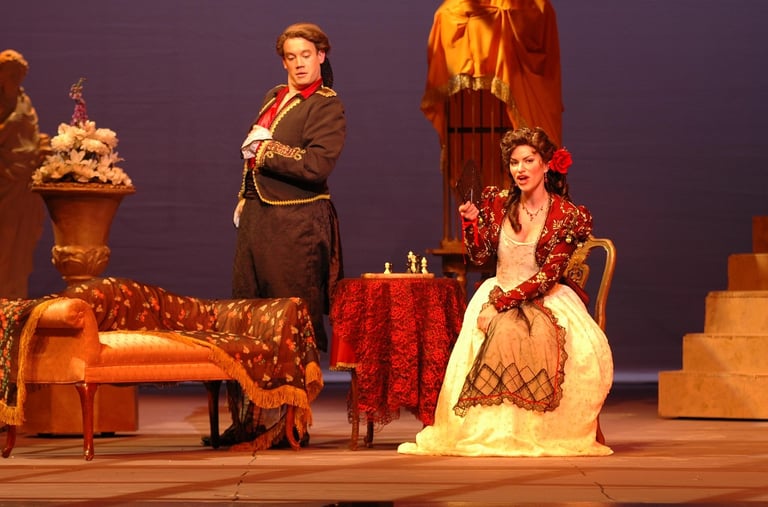
At the Variety and CNN town hall held at the University of Texas at Austin on February 24, Timothée Chalamet said he would not want to be working in ballet or opera, in places where the feeling is, in his words, “keep this thing alive,” because “no one cares about this anymore.” He added that he meant no disrespect, but the remark understandably drew criticism across the arts community.
I disagree with him strongly, though not angrily. I do not think contempt is the right answer to a careless remark, especially from an actor who, whether he intended to or not, was speaking from within an artistic lineage much older and deeper than film stardom. What I object to is not only the phrasing, though the phrasing was clumsy. What unsettles me is the worldview underneath it: the suggestion that an art form’s value can be measured by how loudly the mainstream is currently paying attention.
I cannot accept that.
Opera, ballet, theatre, and the many branches that grow from them are not fading ornaments from a more refined past. They are among the foundation stones of performance itself. They shaped the grammar of spectacle long before the camera arrived to inherit it. They taught us how bodies tell stories before dialogue becomes explanation. They taught us scale, ritual, emotional architecture, rhythm, visual composition, dramatic tension, entrance, silence, release. Even now, many of the things contemporary audiences admire most in film, television, concerts, fashion imagery, and pop performance still carry the fingerprints of stage tradition.
When a movie star holds still at precisely the right moment and lets the body complete what the line has only begun, there is theatre in that. When a director builds a scene around movement, spacing, and visual crescendo, there is dance in that. When a score lifts a piece of drama into heightened emotion, there is opera in that. When popular culture celebrates athletic grace, stylized beauty, emotional extremity, or transformation through costume and gesture, it is often feeding from wells dug by forms some people are too quick to dismiss as old-fashioned. These art forms do not sit on the sidelines of culture waiting to be remembered. They keep sending energy into everything around them.
I also think remarks like that reveal how little public language there is for artistic labor unless it arrives inside a commercially dominant package. Theatre people know this intimately. Dancers know it in their bodies. Opera singers know it in the years of discipline required before the voice can even begin to bloom at full weight. Stage actors know it in repetition, in rejection, in the long apprenticeship that teaches them how to command a room with nothing but breath, text, and nerve. Entire communities of artists have spent lifetimes perfecting forms that ask for rigor most audiences will never fully see, precisely because the work has been done well enough to appear effortless.
That invisibility is not proof of irrelevance. It is proof of mastery.
The trouble with calling these forms dead, dying, or somehow beyond the concern of ordinary people is that it confuses mass visibility with artistic life. Those are not the same thing. Some of the most alive experiences I have ever had as an audience member happened in rooms far smaller than a blockbuster’s opening weekend, far less amplified than whatever the internet was discussing that day. Live performance has a way of stripping away the disposable noise around us. It asks for attention that cannot be half-given. It creates a contract between artist and audience that feels almost sacred in its simplicity: I am here, you are here, and together we will make this fleeting thing matter.
That is not a minor cultural function. That is one of the oldest and most necessary things art can do.
I say this as someone who loves theatre not politely, not academically, not from a distance, but with a real sense of allegiance. I love it because it keeps insisting on human presence in a time that constantly encourages distraction. I love it because it requires the body to mean something. I love it because, at its best, it refuses the flattening speed of modern consumption. There is nothing dead about an art form that still has the power to rearrange the air in a room. There is nothing obsolete about a medium that still asks artists to risk themselves in real time before strangers. There is nothing marginal about a tradition whose influence remains embedded in acting, music, choreography, design, and storytelling across the entire entertainment industry.
And I think this is where my disagreement with Chalamet becomes larger than the remark itself. I do not need him to love opera. I do not need him to become a spokesperson for ballet. Personal taste is personal taste. But I do think artists, especially artists with influence, should speak with greater humility about forms that built the house they now live in. Film did not emerge from nowhere. Screen acting did not invent emotional truth. Cinema learned from theatre, borrowed from opera, absorbed from dance, and continued shaping itself through collaboration with all three. Even the modern idea of spectacle, so central to commercial entertainment, owes an enormous debt to stage traditions that understood grandeur, discipline, and image-making long before digital tools made scale easier to manufacture.
So when I hear someone imply that these forms survive only through nostalgia or institutional life support, I hear a failure of perspective. I hear someone mistaking quieter attention for cultural death. I hear someone overlooking the artists who continue to train, perform, compose, rehearse, direct, design, and devote themselves to forms that still move people profoundly. There are audiences for these works. There are communities built around them. There are young artists still entering them with hunger. There are people whose lives have been changed because they sat in a dark theatre and watched a body tell the truth in motion, or heard a voice reach toward something words alone could not hold.
That matters more to me than trend cycles. It matters more to me than the false hierarchy that places newer forms on top and older ones in a museum. Art is not a tech product. It does not become meaningless because its market share has shifted. A form can be centuries old and still feel urgent. In many cases, age deepens its urgency. It means generations have returned to it because there is something in it worth returning for.
So no, I do not share his view. I think he was wrong. I think he was especially wrong to say it so casually. But I do not need to diminish him to say that. I can grant him talent, charisma, and cultural power while still refusing the premise. In fact, my refusal comes from taking art seriously enough to defend the forms that continue to nourish it from beneath the surface.
Opera is not dead. Ballet is not dead. Theatre is not dead. They are alive in their own houses, and alive inside nearly every other house performance has built since. They remain demanding, difficult, beautiful forms of expression that continue to shape how artists move, speak, sing, imagine, and endure. Their value does not depend on whether everyone is looking at them all at once.
Some art forms do not need to shout to prove they are living. They only need to continue doing what they have always done: disciplining the body, enlarging feeling, and reminding us that expression, at its highest level, is never disposable.
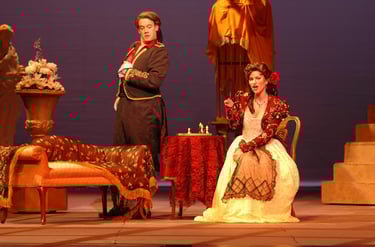
At the Variety and CNN town hall held at the University of Texas at Austin on February 24, Timothée Chalamet said he would not want to be working in ballet or opera, in places where the feeling is, in his words, “keep this thing alive,” because “no one cares about this anymore.” He added that he meant no disrespect, but the remark understandably drew criticism across the arts community.
I disagree with him strongly, though not angrily. I do not think contempt is the right answer to a careless remark, especially from an actor who, whether he intended to or not, was speaking from within an artistic lineage much older and deeper than film stardom. What I object to is not only the phrasing, though the phrasing was clumsy. What unsettles me is the worldview underneath it: the suggestion that an art form’s value can be measured by how loudly the mainstream is currently paying attention.
I cannot accept that.
Opera, ballet, theatre, and the many branches that grow from them are not fading ornaments from a more refined past. They are among the foundation stones of performance itself. They shaped the grammar of spectacle long before the camera arrived to inherit it. They taught us how bodies tell stories before dialogue becomes explanation. They taught us scale, ritual, emotional architecture, rhythm, visual composition, dramatic tension, entrance, silence, release. Even now, many of the things contemporary audiences admire most in film, television, concerts, fashion imagery, and pop performance still carry the fingerprints of stage tradition.
When a movie star holds still at precisely the right moment and lets the body complete what the line has only begun, there is theatre in that. When a director builds a scene around movement, spacing, and visual crescendo, there is dance in that. When a score lifts a piece of drama into heightened emotion, there is opera in that. When popular culture celebrates athletic grace, stylized beauty, emotional extremity, or transformation through costume and gesture, it is often feeding from wells dug by forms some people are too quick to dismiss as old-fashioned. These art forms do not sit on the sidelines of culture waiting to be remembered. They keep sending energy into everything around them.
I also think remarks like that reveal how little public language there is for artistic labor unless it arrives inside a commercially dominant package. Theatre people know this intimately. Dancers know it in their bodies. Opera singers know it in the years of discipline required before the voice can even begin to bloom at full weight. Stage actors know it in repetition, in rejection, in the long apprenticeship that teaches them how to command a room with nothing but breath, text, and nerve. Entire communities of artists have spent lifetimes perfecting forms that ask for rigor most audiences will never fully see, precisely because the work has been done well enough to appear effortless.
That invisibility is not proof of irrelevance. It is proof of mastery.
The trouble with calling these forms dead, dying, or somehow beyond the concern of ordinary people is that it confuses mass visibility with artistic life. Those are not the same thing. Some of the most alive experiences I have ever had as an audience member happened in rooms far smaller than a blockbuster’s opening weekend, far less amplified than whatever the internet was discussing that day. Live performance has a way of stripping away the disposable noise around us. It asks for attention that cannot be half-given. It creates a contract between artist and audience that feels almost sacred in its simplicity: I am here, you are here, and together we will make this fleeting thing matter.
That is not a minor cultural function. That is one of the oldest and most necessary things art can do.
I say this as someone who loves theatre not politely, not academically, not from a distance, but with a real sense of allegiance. I love it because it keeps insisting on human presence in a time that constantly encourages distraction. I love it because it requires the body to mean something. I love it because, at its best, it refuses the flattening speed of modern consumption. There is nothing dead about an art form that still has the power to rearrange the air in a room. There is nothing obsolete about a medium that still asks artists to risk themselves in real time before strangers. There is nothing marginal about a tradition whose influence remains embedded in acting, music, choreography, design, and storytelling across the entire entertainment industry.
And I think this is where my disagreement with Chalamet becomes larger than the remark itself. I do not need him to love opera. I do not need him to become a spokesperson for ballet. Personal taste is personal taste. But I do think artists, especially artists with influence, should speak with greater humility about forms that built the house they now live in. Film did not emerge from nowhere. Screen acting did not invent emotional truth. Cinema learned from theatre, borrowed from opera, absorbed from dance, and continued shaping itself through collaboration with all three. Even the modern idea of spectacle, so central to commercial entertainment, owes an enormous debt to stage traditions that understood grandeur, discipline, and image-making long before digital tools made scale easier to manufacture.
So when I hear someone imply that these forms survive only through nostalgia or institutional life support, I hear a failure of perspective. I hear someone mistaking quieter attention for cultural death. I hear someone overlooking the artists who continue to train, perform, compose, rehearse, direct, design, and devote themselves to forms that still move people profoundly. There are audiences for these works. There are communities built around them. There are young artists still entering them with hunger. There are people whose lives have been changed because they sat in a dark theatre and watched a body tell the truth in motion, or heard a voice reach toward something words alone could not hold.
That matters more to me than trend cycles. It matters more to me than the false hierarchy that places newer forms on top and older ones in a museum. Art is not a tech product. It does not become meaningless because its market share has shifted. A form can be centuries old and still feel urgent. In many cases, age deepens its urgency. It means generations have returned to it because there is something in it worth returning for.
So no, I do not share his view. I think he was wrong. I think he was especially wrong to say it so casually. But I do not need to diminish him to say that. I can grant him talent, charisma, and cultural power while still refusing the premise. In fact, my refusal comes from taking art seriously enough to defend the forms that continue to nourish it from beneath the surface.
Opera is not dead. Ballet is not dead. Theatre is not dead. They are alive in their own houses, and alive inside nearly every other house performance has built since. They remain demanding, difficult, beautiful forms of expression that continue to shape how artists move, speak, sing, imagine, and endure. Their value does not depend on whether everyone is looking at them all at once.
Some art forms do not need to shout to prove they are living. They only need to continue doing what they have always done: disciplining the body, enlarging feeling, and reminding us that expression, at its highest level, is never disposable.
Related Articles
Related Articles
Stay in the Loop
Get fresh reviews and theatre news straight from your inbox.
Editorial & Press Inquiries
Looking to feature your production or extend a press invitation? I’d love to hear from you.
whilitshow@gmail.com
Editorial & Press Inquiries
Looking to feature your production or extend a press invitation? I’d love to hear from you.
whilitshow@gmail.com
Contact
Follow me on social media
whilitshow@gmail.com
© 2026. All rights reserved.