

Review: The Phantom of the Opera Haunts and Enchants Bangkok Once More
With assured performances and undiminished spectacle, The Phantom of the Opera’s return to Bangkok proves why the musical continues to dominate global stages.
THEATER REVIEWLATEST
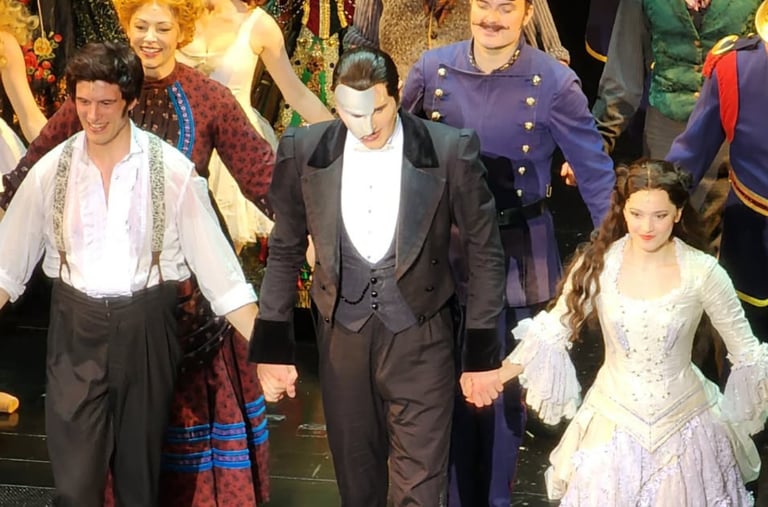
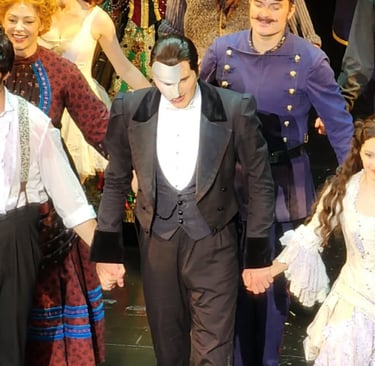
The Phantom of the Opera returned to Thailand in August 2025 as one of musical theatre’s longest-running and most widely travelled productions. Few productions can claim that kind of longevity without becoming museum pieces. Premiering in London’s West End in 1986, Andrew Lloyd Webber’s adaptation of Gaston Leroux’s novel reshaped the idea of what a megamusical could be. Lavish, romantic, unapologetically grand, Phantom became a global export almost immediately, defining a style of musical theatre built on scale, excess, and technical precision.
By 2025, the show had reached its 39th year, a milestone that would suggest diminishing returns for most productions. Instead, Phantom continues to tour across Asia with the confidence of a work that knows exactly what it is. The Bangkok engagement, running from August 5 to 31 at the Muangthai Rachadalai Theatre, was part of a larger regional tour stretching into early 2026. It marked the show’s return to Thailand after twelve years, and the response in the house suggested that the appetite for it has not waned.
Spectacle remains Phantom’s most immediate calling card, and this production delivered it without restraint. The rising chandelier still commands attention, drawing audible reactions from the audience the moment it ascends. When it finally dropped, the effect was as sharp as ever. I felt my heart jolt, followed by an emotional release that surprised me despite knowing exactly what was coming. That is the strange achievement of Phantom: it retains its power even when its most famous moments are entirely predictable. The scale, the timing, and the commitment make it land anyway.
What impressed me most, however, was how little the production felt compromised by time. The design remains expansive and the staging confident in its own excess. Phantom does not attempt subtlety, nor should it. It succeeds because it gives itself over fully to theatrical abundance. Nothing feels rationed. The show asks for spectacle and delivers it consistently.
My decision to fly from Manila to Bangkok for this run was driven by one performance in particular. Grace Roberts as Christine Daaé was the reason I needed to see this production live. Having watched clips of her Singapore performances, I already had a sense of what she could do, but hearing her in the theatre confirmed it. Her cadenza in “Think of Me” was the moment I had been waiting for, not because it aimed to distinguish itself through novelty, but because of its technical clarity and confidence. The passage was clean, assured, and carried effortlessly to the front balcony where I was seated. There was nothing tentative in her delivery. Roberts trusted the writing, allowing the vocal line to land with precision rather than excess.
Equally compelling was her chemistry with Rory McCollum’s Raoul. Their pairing gave emotional grounding to the production, particularly in “All I Ask of You.” That rooftop scene landed with warmth and sincerity, the kind of romantic clarity that Phantom needs to counterbalance its darker impulses. McCollum’s Raoul felt present and engaged, offering Christine a genuine alternative rather than a narrative necessity. Their duet unfolded naturally, without forced sentiment, which made the contrast with the Phantom’s world all the more pronounced.
Samuel Wynn-Morris as The Phantom delivered a performance that exceeded my expectations. His portrayal is, quite simply, the version that now lives in my head. From his first appearance, he was magnetic, commanding attention without overstating the character’s menace. Vocally, he showed strength and control, the kind that marks a performer operating comfortably at a global level. There is an ease to his presence that makes it dangerously easy to root for him, even when the narrative insists otherwise.
What distinguished Wynn-Morris’s performance was how clearly he charted the Phantom’s descent. As the story progressed and the character’s obsession intensified, his Phantom transformed into someone more desperate, more fractured. The shift felt earned, not imposed. He did not soften the character’s cruelty, but he made its origins legible. That balance is difficult to achieve, and Wynn-Morris handled it with discipline and insight.
Together, the three leads anchored the production with clarity and conviction. Their performances reminded me why Phantom continues to attract performers of this caliber. It remains a showcase for vocal prowess, dramatic commitment, and theatrical presence.
At this point in its life, The Phantom of the Opera no longer needs to justify itself. It exists as a benchmark. What matters is whether a given production honors the demands it sets for itself. This Bangkok run did. The show remains a masterclass in large-scale musical theatre, not because it has evolved dramatically, but because it understands its own language so completely.
I am giving The Phantom of the Opera in Bangkok a 10 out of 10. It is rare for a production of this age to feel so assured in its identity. Wherever this touring company goes next, I am confident I will follow. If it returns in 2026, I will be there again. Some shows earn that kind of loyalty. Phantom remains one of them.
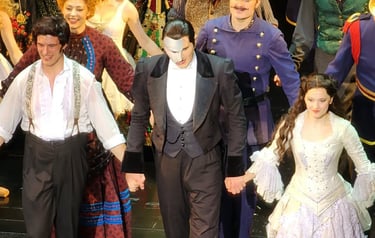
The Phantom of the Opera returned to Thailand in August 2025 as one of musical theatre’s longest-running and most widely travelled productions. Few productions can claim that kind of longevity without becoming museum pieces. Premiering in London’s West End in 1986, Andrew Lloyd Webber’s adaptation of Gaston Leroux’s novel reshaped the idea of what a megamusical could be. Lavish, romantic, unapologetically grand, Phantom became a global export almost immediately, defining a style of musical theatre built on scale, excess, and technical precision.
By 2025, the show had reached its 39th year, a milestone that would suggest diminishing returns for most productions. Instead, Phantom continues to tour across Asia with the confidence of a work that knows exactly what it is. The Bangkok engagement, running from August 5 to 31 at the Muangthai Rachadalai Theatre, was part of a larger regional tour stretching into early 2026. It marked the show’s return to Thailand after twelve years, and the response in the house suggested that the appetite for it has not waned.
Spectacle remains Phantom’s most immediate calling card, and this production delivered it without restraint. The rising chandelier still commands attention, drawing audible reactions from the audience the moment it ascends. When it finally dropped, the effect was as sharp as ever. I felt my heart jolt, followed by an emotional release that surprised me despite knowing exactly what was coming. That is the strange achievement of Phantom: it retains its power even when its most famous moments are entirely predictable. The scale, the timing, and the commitment make it land anyway.
What impressed me most, however, was how little the production felt compromised by time. The design remains expansive and the staging confident in its own excess. Phantom does not attempt subtlety, nor should it. It succeeds because it gives itself over fully to theatrical abundance. Nothing feels rationed. The show asks for spectacle and delivers it consistently.
My decision to fly from Manila to Bangkok for this run was driven by one performance in particular. Grace Roberts as Christine Daaé was the reason I needed to see this production live. Having watched clips of her Singapore performances, I already had a sense of what she could do, but hearing her in the theatre confirmed it. Her cadenza in “Think of Me” was the moment I had been waiting for, not because it aimed to distinguish itself through novelty, but because of its technical clarity and confidence. The passage was clean, assured, and carried effortlessly to the front balcony where I was seated. There was nothing tentative in her delivery. Roberts trusted the writing, allowing the vocal line to land with precision rather than excess.
Equally compelling was her chemistry with Rory McCollum’s Raoul. Their pairing gave emotional grounding to the production, particularly in “All I Ask of You.” That rooftop scene landed with warmth and sincerity, the kind of romantic clarity that Phantom needs to counterbalance its darker impulses. McCollum’s Raoul felt present and engaged, offering Christine a genuine alternative rather than a narrative necessity. Their duet unfolded naturally, without forced sentiment, which made the contrast with the Phantom’s world all the more pronounced.
Samuel Wynn-Morris as The Phantom delivered a performance that exceeded my expectations. His portrayal is, quite simply, the version that now lives in my head. From his first appearance, he was magnetic, commanding attention without overstating the character’s menace. Vocally, he showed strength and control, the kind that marks a performer operating comfortably at a global level. There is an ease to his presence that makes it dangerously easy to root for him, even when the narrative insists otherwise.
What distinguished Wynn-Morris’s performance was how clearly he charted the Phantom’s descent. As the story progressed and the character’s obsession intensified, his Phantom transformed into someone more desperate, more fractured. The shift felt earned, not imposed. He did not soften the character’s cruelty, but he made its origins legible. That balance is difficult to achieve, and Wynn-Morris handled it with discipline and insight.
Together, the three leads anchored the production with clarity and conviction. Their performances reminded me why Phantom continues to attract performers of this caliber. It remains a showcase for vocal prowess, dramatic commitment, and theatrical presence.
At this point in its life, The Phantom of the Opera no longer needs to justify itself. It exists as a benchmark. What matters is whether a given production honors the demands it sets for itself. This Bangkok run did. The show remains a masterclass in large-scale musical theatre, not because it has evolved dramatically, but because it understands its own language so completely.
I am giving The Phantom of the Opera in Bangkok a 10 out of 10. It is rare for a production of this age to feel so assured in its identity. Wherever this touring company goes next, I am confident I will follow. If it returns in 2026, I will be there again. Some shows earn that kind of loyalty. Phantom remains one of them.
Related Articles
Related Articles

Stay in the Loop
Get fresh reviews and theatre news straight from your inbox.
Editorial & Press Inquiries
Looking to feature your production or extend a press invitation? I’d love to hear from you.
whilgorumba@gmail.com
Editorial & Press Inquiries
Looking to feature your production or extend a press invitation? I’d love to hear from you.
whilgorumba@gmail.com
Contact
Follow me on social media
whilitshow@gmail.com
© 2026. All rights reserved.